Curriculum Intent:
What will students learn at KS3?
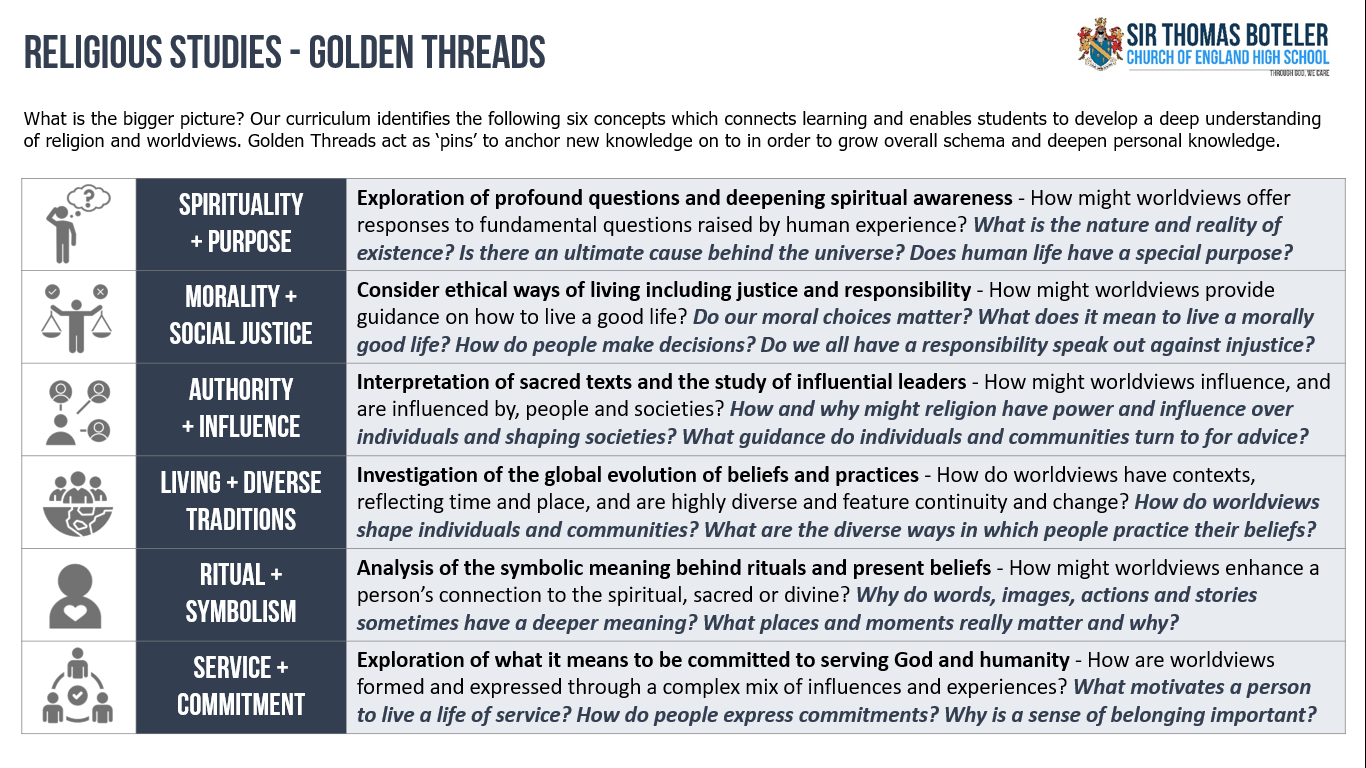
The KS3 curriculum follows the Diocesan’s ‘Illuminating Pathways’ syllabus and all students have Religious Studies three hours per fortnight. Students will begin to explore central beliefs, values and practices of Christianity and other religious and non-religious worldviews. Students will not only examine the evolution of beliefs and practices of major world religions, but they are also encouraged to open their hearts and minds to the biggest questions of life, beliefs about God, issues of morality and what it means to be human. Our curriculum is sequenced to identify threshold concepts and skills that enable students to build upon prior learning and integrate new content into their existing schema in order to access subsequent topics at KS4.
What will students learn at KS4?
The KS4 curriculum follows the AQA Religious Studies (Specification A) syllabus. All students have Religious Studies five hours per fortnight and will sit the full course GCSE examination at the end of Year 11. In Year 10, students will develop a deep knowledge of Christianity and Judaism. They will examine diverse beliefs and key practices within these religions including their contributions in supporting local and world-wide communities. In Year 11 students apply their knowledge of Christianity and Judaism to four contemporary ethical themes: Religion and families – Religion and life – Religion, peace and conflict – Religion, crime and punishment.